

Saturday, 20/06/2026, 15:40 (GMT +7)
 412
412
Maritime Traffic Through the Strait of Hormuz Begins to Resume, but Challenges Remain
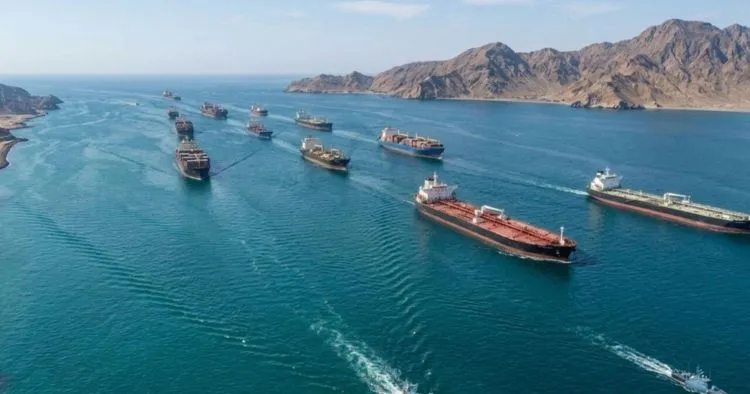
Source: 7deniz
Maritime traffic through the Strait of Hormuz has begun to show signs of recovery in recent days. However, just 48 hours after the United States and Iran signed the MOU, it is becoming increasingly clear that a substantial gap remains between the legal reopening of the waterway and the full resumption of commercial shipping operations.
While recent diplomatic developments have provided reasons for optimism, the maritime industry continues to contend with unresolved issues surrounding maritime security, insurance requirements, and operational procedures.
Vessel Traffic Is Improving, But Far From Normal
The Strait of Hormuz handles approximately 20% of global oil supply and 25% of all seaborne oil trade. Before the conflict erupted in late February, the waterway accommodated an average of around 120 vessel transits per day.
According to data from AXS Marine, 25 vessels transited the strait on June 18 - the date the MOU officially came into effect. This represented the highest daily traffic volume since mid-April and was roughly five times higher than the average level recorded in early June.
Nevertheless, current traffic remains only about 21% of normal pre-conflict levels.
On the same day, Iran’s Islamic Revolutionary Guard Corps (IRGC) reportedly issued warning signals to several vessels operating near the strait, prompting a Hong Kong-flagged tanker and a Saint Kitts & Nevis-flagged bulk carrier to alter their routes.
From a diplomatic perspective, the cancellation of the anticipated U.S.-Iran talks in Geneva has further reinforced market caution.
Mine Clearance Operations Remain a Critical Factor
One of the most significant obstacles to restoring normal shipping operations is the potential presence of naval mines along key maritime routes.
The Joint Maritime Information Center (JMIC), led by the U.S. Navy, has advised vessels to limit the use of the IMO-designated Traffic Separation Scheme (TSS) until mine clearance operations are completed.
JMIC has urged masters and crews to remain vigilant regarding the potential mine threat in the area and to prepare for an increased naval presence while clearance activities continue.
According to military experts, mine clearance operations are often far more complex and time-consuming than mine deployment itself. Some assessments suggest that fully clearing major shipping lanes could take up to six months.
During this period, many vessels may be required to use alternative shipping corridors designated by Iranian authorities or continue avoiding the Hormuz region altogether.
Permit Requirements and Insurance-Related Challenges
In addition to security concerns, shipowners and operators must also navigate new administrative requirements imposed by Iran.
Under directives issued by the Persian Gulf Strait Authority (PGSA), vessels wishing to transit the Strait of Hormuz must submit permit applications at least 48 hours in advance and carry approved war-risk insurance coverage for the voyage.
PGSA has also instructed vessels to strictly adhere to designated navigation routes, warning that deviations may be considered regulatory violations.
Tim Wilkins, Managing Director of INTERTANKO, commented: "We don't know what this new 'insurance' actually is - or who, in practice, we're paying."
He added: "Paying insurance is a toll."
The situation is further complicated by the fact that PGSA remains subject to sanctions imposed by the U.S. Office of Foreign Assets Control (OFAC).
During the 60-day validity period of the MOU, PGSA is providing insurance coverage free of charge. However, once that period expires, any payments associated with the scheme could create compliance risks for Western companies.
War-Risk Insurance Premiums Remain Elevated
Prior to the crisis, war-risk surcharges for vessels operating in the Hormuz region typically ranged between 0.15% and 0.25% of a vessel’s hull value.
At the height of the tensions, premiums surged to between 3% and 8%, equivalent to approximately USD 3 million to USD 8 million per voyage for a large crude tanker.
According to BIMCO, transiting the Strait of Hormuz continues to be classified as a high-risk operation.
Jakob Larsen, BIMCO’s Head of Safety and Security, stated: "The next step is for shipowners to be reassured that transiting the Strait of Hormuz is not only permitted, but also safe."
Shipping companies are also maintaining a cautious stance. Maersk has indicated that it is still too early to fully assess the impact of the MOU and that no significant adjustments have yet been made to its Middle East operations.
Most major ocean carriers continue to route vessels around the Cape of Good Hope.
Diplomatic Progress and Operational Realities Remain Out of Sync
Industry observers believe that the MOU’s 60-day timeframe may not align with the pace required to resolve operational challenges on the ground.
Ray Takeyh, Senior Fellow at the Council on Foreign Relations (CFR), commented: "It is hard to see how this timetable is sustainable."
Meanwhile, Angad Banga, CEO of Caravel Group, noted: "We are maintaining enhanced manning and citadel readiness until we have 30 days of incident-free transits. Not three days."
Market Remains in a Wait-and-See Mode
Following the announcement of the MOU, Brent crude prices declined from above USD 100 per barrel to around USD 79–80 per barrel.
Nevertheless, the maritime industry remains cautious.
Haider Anjum, an analyst at Jyske Bank, observed: "The shipping companies probably want to wait until it is clear that the agreement holds, as we have already had Hormuz 'open' for a very short time twice before."
For maritime traffic through the Strait of Hormuz to genuinely return to normal, the market will need additional time for mine-clearance operations, stabilization of war-risk insurance costs, resolution of permit-related uncertainties, and the restoration of carrier service networks.
The recent increase in vessel traffic is undoubtedly an encouraging sign. However, from both an operational and commercial standpoint, the normalization of shipping activities through Hormuz is likely to occur gradually rather than through an immediate return to pre-crisis conditions.
See more:
- Port of Helsinki Records 9.4% Growth in Container Traffic in Early 2026
- 5 Compliance Blind Spots Exposing the Air Cargo Industry to Hidden Risks
- CMA CGM to Acquire Crystal Aero Solutions, Expanding Aircraft Maintenance Capabilities
- Hormuz Strait Reopens: A Positive Catalyst for South Africa’s Agricultural Exports
- Import Volumes at the Port of Los Angeles Surge Amid Rising Freight Costs and Tariff Pressures
- ONE Restructures AD1 Service to Enhance Connectivity Between the Adriatic and Eastern Mediterranean
- Maersk Adjusts Peak Season Surcharge (PSS) on Asia – Southern Africa Trade from July 2026
- Maritime Risks in the Strait of Hormuz Remain Severe Despite Diplomatic Progress
- Global Air Cargo Volumes Rebound as Freight Rates Ease
- CMA CGM Introduces Peak Season Surcharge (PSS) on China–West Africa Trade
- Hormuz Ceasefire: Shipping Market Cautiously Watches Developments
- Ocean Alliance’s AEU7 Service Adds Gdansk Port, Expanding Europe–Asia Connectivity
- International Shipping and Logistics Market Update Week 24/2026 | Phaata
- Decoding Gemini’s Strategy: Reducing North Europe Capacity While Expanding Its Mediterranean Presence
- COSCO schedules: Vietnam - North America in Jun 2026
- COSCO updates Vietnam-Intra Asia sailing schedules in Jun 2026
- COSCO updates Vietnam-North Europe sailing schedules in Jun 2026
- SITC updates Vietnam-Intra Asia sailing schedules in Jun 2026
Source: Phaata.com (According to Tech Times)
► Find Better Freight Rates & Logistics Service Providers!


Featured News
- Hapag-Lloyd applies Peak Season Surcharge from East Asia to USA and Canada
- The world\'s largest container ships MSC Irina and MSC Loreto floated
- MSC (Mediterranean Shipping Company) - The world\'s leading container shipping lines
- Information you need to know about Maersk Line
- Top 10 export and import goods between Vietnam - Philippines in the first 5 months of 2020

 Market News
See more

_-_Copy.webp)
.webp)
.webp)

 HOT PROMO
See more
10
 FCL
FCL
 2 Days
 Freight cost

CÔNG TY TNHH PIO LOGISTICS
652
FCL
31 Days
Freight cost

CÔNG TY TRÁCH NHIỆM HỮU HẠN DT LOGISTICS (VN)
1726
FCL
30 Days
Freight cost

CÔNG TY TNHH PEGASHIP
3462
FCL
45 Days
Freight cost

Compass Logistics
 Premium
5036
FCL
30 Days
Freight cost
Premium
5036
FCL
30 Days
Freight cost

CÔNG TY TNHH INTERNATIONAL LOGISTICS GLORY (VIỆT NAM)
Why do thousands of businesses trust Phaata?
USERS/MONTH
LOGISTICS COMPANIES
REQUEST FOR QUOTEŚ
QUOTATIONS
VIETNAM LOGISTICS COMMUNITY
5 Steps to Get the Best Quote
Find a price quickly/Send a RFQ
Compare multiple options
Contact for Further Consultation
Negotiating prices/services
Management & rating
 Freight rates
Sea freight
- FCL
See more
20
26
Days Direct
- ₫149,251,320 / 20'GP
- ₫185,241,000 / 40'GP
- ₫185,241,000 / 40'HQ

CÔNG TY TNHH TIẾP VẬN TOÀN CẦU KM
221
5
Days Direct
- ₫22,493,550 / 20'GP
- ₫44,987,100 / 40'HQ

CÔNG TY TNHH NGUYÊN ĐĂNG VIỆT NAM
347
10
Days Direct
- ₫46,310,250 / 40'HQ
CÔNG TY TNHH INTERNATIONAL LOGISTICS GLORY (VIỆT NAM)
387
4
Days Direct
- ₫529,260 / 20'GP
CÔNG TY TRÁCH NHIỆM HỮU HẠN DT LOGISTICS (VN)
436

Sea freight
- LCL
See more
435
7
Days Direct
- ₫105,852 /cbm

Công ty Cổ phần vận tải xuyên đại dương OVC
2,916
4
Days Direct
- ₫26,463 /cbm

CÔNG TY TNHH IEC EXPRESS (VIỆT NAM)- CHI NHÁNH HÀ NỘI
3,995
5
Days Direct
- ₫26,463 /cbm

CHI NHÁNH TẠI THÀNH PHỐ HỒ CHÍ MINH - CÔNG TY CỔ PHẦN MG LOGISTICS
4,448
8
Days Direct
- Refund ₫2,362,500 /cbm

CÔNG TY CỔ PHẦN TIẾP VẬN INTERCARGO
4,762
4
Days Direct
- ₫26,463 /cbm

CÔNG TY CỔ PHẦN GIAO NHẬN VẬN TẢI MỸ Á (ASL LOGISTICS)
 Air freight
- General cargo
Air freight
- General cargo
See more
1,603
10
Days Transit
- 264,630 ₫/kg

Phoenix Logistics Vietnam - chi nhánh TP. Hồ Chí Minh (Phoenix International Forwarding Vietnam )
2,635
1
Days Direct
- 185,241 ₫/kg

CÔNG TY TNHH THƯƠNG MẠI VÀ DỊCH VỤ FASTRANS
5,990
 5,572
8
Days Transit
5,572
8
Days Transit
- 224,936 ₫/kg

CÔNG TY TNHH SEA GLOBAL VIỆT NAM
3,053
1
Days Direct
- 502,797 ₫/kg

CÔNG TY TNHH VẬN TẢI QUỐC TẾ GIA PHÚ
 Rail freight
- FCL
Rail freight
- FCL
See more
163
3
Days Direct
- ₫15,083,910 / 40'HQ

CÔNG TY CỔ PHẦN VẬN TẢI VÀ THƯƠNG MẠI ĐƯỜNG SẮT
1,499
5
Days Direct
- ₫26,463,000 / 40'HQ
- ₫26,463,000 / 45'HQ

CÔNG TY TNHH PHƯỚC TÁ
11,099
7
Days Direct
- ₫48,956,550 / 20'GP

Công ty TNHH T&M Forwarding
10,348
5
Days Direct
- ₫7,145,010 / 20'GP
ASIAN EXPRESS LINE VIETNAM ( AEL VIET NAM )
8,439
10
Days Direct
- ₫9,262,050 / 20'GP

CÔNG TY CỔ PHẦN LOGISTICS QUỐC TẾ V&T
 Road freight
- FCL
Road freight
- FCL
See more
43,168
1
Day
- ₫6,868,686 / 20'OT
- ₫6,868,686 / 40'OT
- ₫6,868,686 / 40'OT HQ

CÔNG TY TNHH LIÊN VẬN QUỐC TẾ SHINING OCEAN VIỆT NAM
100,856
2
Day
- ₫6,500,000 / 40'RF
- ₫6,500,000 / 40'RQ
- ₫6,500,000 / 45'RQ

CÔNG TY CP PROSHIP
Premium
170,964
1
Day
- ₫18,997,200 / 20'GP
- ₫18,997,200 / 40'GP

CÔNG TY CỔ PHẦN GIAO NHẬN VẬN TẢI CON ONG
263,207
3
Day
- ₫32,000,000 / 20'GP
- ₫64,000,000 / 40'GP
- ₫64,000,000 / 40'HQ
- ₫64,000,000 / 45'HQ

Công ty Cổ phần phát triển thương mại Thuận Đạt Việt Nam
283,631


